
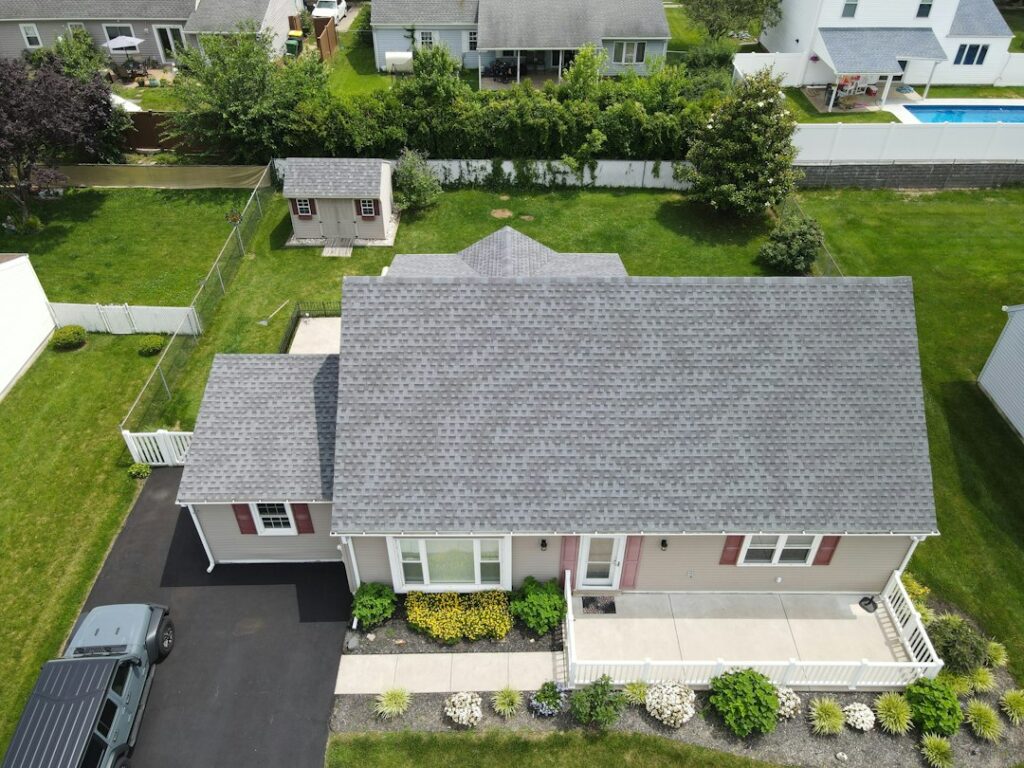
Choosing a roof color in Albany, NY involves more than picking a shade that looks attractive in a sample book. The color should work with the home’s siding, brick, trim, landscaping, architectural style, and the seasonal conditions common in the region.
A roof is one of the largest visible surfaces on a house, so even a modest change in color can affect the character of the entire property. The most reliable approach is to evaluate appearance, heat absorption, neighborhood context, maintenance, and local requirements together.
Which roof colors work well with common Albany homes?
Neutral roof colors are usually the most adaptable. Charcoal, medium gray, weathered gray, brown, and blended earth tones can complement many siding and masonry combinations without overpowering the rest of the house.
The best choice depends on the colors and materials already present:
- White, cream, or light gray siding: Charcoal, medium gray, brown, or muted green can provide contrast.
- Beige, tan, or brown siding: Brown, weathered wood tones, dark gray, or warm mixed shingles often coordinate naturally.
- Red or brown brick: Deep gray, brown, black, and muted red-brown blends tend to work better than bright or highly saturated colors.
- Blue, green, or other cool siding: Gray, charcoal, and cool brown usually create a more balanced appearance.
- Stone foundations or masonry details: A roof color that repeats one of the stone’s darker or lighter tones can help unify the exterior.
A blended shingle may be easier to coordinate than a single flat color. Subtle variations can connect several exterior materials, but strong color variation may look busy on a small or visually complex home.
Should a roof be lighter or darker?
A lighter roof generally reflects more sunlight, while a darker roof tends to absorb more solar heat. In a region with warm summers and cold, snowy winters, the difference may matter, but it is rarely the only factor controlling indoor comfort.
Attic ventilation, insulation, roof design, air sealing, and the roof’s orientation have a major influence on how much heat reaches the living space. A light-colored roof cannot correct an under-insulated attic, and a dark roof is not automatically unsuitable for a northern climate.
Lighter colors may be worth considering when:
- The attic or upper floor becomes uncomfortably warm during summer.
- The home has limited shade and broad roof surfaces facing the sun.
- The exterior design favors a softer, less visually heavy appearance.
- A cooler roof assembly is available in a color that suits the property.
Darker colors may be practical when:
- The home has a traditional design that benefits from strong roof contrast.
- The roof is highly visible and a deeper tone helps define the structure.
- The siding, brick, or trim already includes dark accents.
- The household prefers a color that hides minor marks and inconsistent weathering.
Color alone does not determine energy performance. Product ratings, roofing materials, ventilation, and the complete roof assembly should be considered before assuming that a particular shade will noticeably change heating or cooling costs.
How should roof color relate to the home’s architecture?
The roof color should support the building’s proportions and design rather than compete with them. A simple ranch-style home may accommodate a broad range of neutral shades, while a Victorian, Colonial Revival, or other older residence may look more appropriate with historically compatible colors.
On a home with steep roof slopes, dormers, gables, or multiple roof sections, the color will be especially prominent. A complex roof often looks more balanced with a restrained color blend. A very high-contrast pattern can draw attention to every roofline and make the exterior appear visually fragmented.
For older homes, look at the age and character of the structure before choosing a modern or highly dramatic color. Deep gray, brown, slate-like tones, and muted blends often preserve a traditional appearance without requiring an exact historical match.
What should be considered in older or historic areas?
Some properties in Albany are located within designated historic districts or involve locally protected landmarks. Exterior changes in those areas may be subject to review, particularly when the work changes a building’s materials, color, or outward appearance.
Before selecting a roof color, determine whether the property has historic protections or other design requirements. This is especially relevant for homes with distinctive roof forms, original architectural details, or strong relationships to neighboring buildings.
Historic review does not necessarily mean that only one color is permitted. It may mean that the selected material and color must be compatible with the structure and surrounding streetscape. Checking the applicable rules before ordering materials can prevent delays or an unsuitable choice.
Does roof color affect winter performance?
Roof color does not determine whether a roof will shed snow safely or resist winter damage. Roof pitch, underlayment, flashing, drainage, ventilation, and installation quality are more significant factors.

A dark roof may warm more quickly during sunny winter conditions, but that does not guarantee uniform snow melting. Meltwater can refreeze near colder eaves and contribute to ice buildup. Snow retention and ice-related problems are connected more to roof design, insulation, ventilation, and drainage than to color alone.
In Albany’s winter conditions, the practical priorities are a sound roof system, properly detailed edges and penetrations, clear drainage paths, and adequate attic performance. Color should be treated primarily as an appearance decision with some possible heat-related effects, not as a substitute for proper construction.
How can a color be judged accurately before installation?
Small samples can be misleading. A roof viewed from a distance may appear lighter, darker, or less varied than the same material seen close up.
Evaluate samples in several conditions:
- Place them against the actual siding, brick, trim, and foundation materials.
- View them in morning, midday, and late-afternoon light.
- Check the color on both sunny and cloudy days.
- Stand at the approximate distance from which the roof will usually be seen.
- Look at the sample against snow, wet pavement, and seasonal landscaping if possible.
- Compare a single-color sample with a blended option before deciding.
Digital renderings are useful for general comparison but should not be treated as exact color matches. Screens vary, and computer images rarely reproduce the texture and granule variation of roofing materials accurately.
Which roof colors are easiest to maintain?
No roof color stays unchanged forever. Sun exposure, airborne debris, algae, moss, moisture, and normal weathering can alter the appearance over time.
Lighter roofs may make dark marks, biological growth, and scattered debris more noticeable. Very dark roofs can show pale residue, fading, and uneven weathering. Mid-range grays and brown blends often provide a practical balance because small variations are less visually obvious.
The roof’s exposure matters as much as its color. Shaded areas beneath trees may collect leaves and remain damp longer, while open areas may experience stronger sun and faster color change. Trimming overhanging branches where appropriate and keeping drainage paths clear will generally matter more than selecting a color marketed as “low maintenance.”
What are the most common roof-color mistakes?
The most common mistake is choosing a color from a tiny sample without considering the whole exterior. Other problems include matching the roof too closely to the siding, selecting a highly contrasting color that overwhelms the architecture, and assuming that dark or light shingles alone will solve indoor temperature issues.
It is also easy to overlook neighboring homes. A roof does not need to match surrounding properties, but an extremely unusual color may look disconnected from the street or reduce flexibility if the home is sold later.
A sound decision usually comes from comparing several restrained options in natural light, checking any historic or design requirements, and giving greater weight to the home’s permanent materials—such as brick, stone, and trim—than to temporary landscaping or paint colors.
A practical way to narrow the choices
Start with three questions:
1. Which exterior color needs to be coordinated first: siding, brick, stone, or trim?
2. Should the roof blend into the home or create clear contrast?
3. Is the priority appearance, reduced solar heat, subtle weathering, or compatibility with historic character?
Once those answers are clear, compare a few neutral or blended samples rather than dozens of unrelated shades. For most area households, a medium or dark gray, weathered brown, or subdued mixed tone provides a durable visual foundation that fits both traditional and newer homes.
